MARKET
India's 1.2 billion AI gap — the math
भारत का 1.2 अरब AI का अंतर — आँकड़े
Published 2026-03-12 · Aarambha प्रकाशित 2026-03-12 · आरम्भ
The 1.2 Billion AI Gap: A Market Missed, A Future Unwritten
India. A nation of over 1.4 billion people. A vibrant, dynamic, and incredibly diverse landscape that's often painted with broad strokes when it comes to technology. But what if we told you there’s a massive, almost unfathomable gap in the AI revolution – a gap that represents over a billion potential users, a significant chunk of our population, who are currently being left behind?
At Aarambha, we don't just see a problem; we see an opportunity. A colossal, game-changing opportunity that most AI companies, especially those funded by venture capital, are completely missing. It’s not just about building better tech; it’s about building for Bharat, for the real India, and understanding the math behind it.
The English Filter: How We Shrink Our Own Market
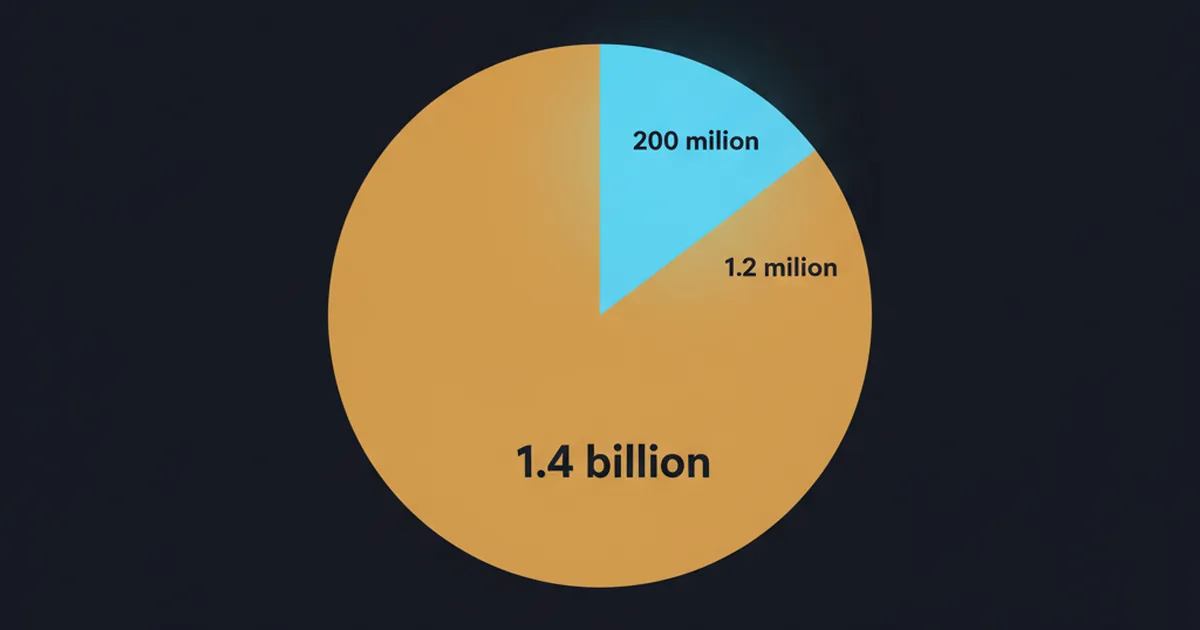
Let’s start with some stark numbers. Our population is 1.4 billion+. Fantastic, right? A massive addressable market. But then, almost instinctively, the filter comes on. How many speak English? Roughly 200 million. That’s a significant number, no doubt. It’s larger than many developed nations' entire populations. And this 200 million becomes the default target for most tech companies, especially in the AI space.
Why? Because English is the language of code, of venture capital presentations, of global tech conferences. It's the path of least resistance for product development and market entry. If you build an AI product in English, you immediately tap into a well-understood, relatively affluent, and tech-savvy segment of the Indian population.
But here's the kicker: by focusing solely on this 200 million, you are, by default, ignoring 1.2 billion people. That's 85% of our population. Think about that for a moment. Eighty-five percent of India, largely non-English speaking, is currently underserved, if not completely unserved, by the AI revolution.
The Jio Revolution: Bharat is Ready, Are We?
Now, let's introduce another game-changer: the smartphone and the incredible reach of affordable data, largely spearheaded by the Jio revolution. Today, we have over 500 million internet users in rural India alone. These aren't just passive consumers; they are active, engaged users of WhatsApp, YouTube, and various social media platforms. They have smartphones, they have data, and they are hungry for solutions that make their lives easier, more productive, and more connected.
Imagine the power of this demographic. Farmers looking for real-time weather information in their local dialect. Small business owners needing assistance with inventory or customer service in Hindi. Students in remote villages seeking educational content that speaks their language and understands their context. The demand is not just there; it's palpable.
This isn't just about urban centers anymore. The digital divide is shrinking, not in terms of access to devices or data, but in terms of access to relevant, useful, and language-appropriate AI solutions. The infrastructure is built; the users are connected. The question is, where are the AI solutions for them?
The biggest market in India isn't where the English speakers are; it's where the next billion users are waiting to be served, in their language, on their terms.
The Venture Math vs. Impact Math: Why Companies Miss Bharat
So, why is this massive market being overlooked? It largely boils down to "venture math" versus "impact math."
The Lure of Venture Math
Venture capital, by its very nature, seeks exponential growth and quick returns. The fastest path to this often involves:
- Targeting English speakers: Lower development costs, easier access to existing frameworks and talent, and a demographic that already understands and uses similar global tech products.
- Focusing on high-value transactions: Building AI for finance, enterprise solutions, or specific high-income segments where the average revenue per user (ARPU) is higher.
- Scalability through existing paradigms: Replicating successful models from Western markets, which often don't translate well to the unique nuances of Bharat.
This approach isn't inherently wrong; it's just limited. It's designed to minimize risk and maximize a specific type of return, often overlooking the complexities and the immense potential of the larger Indian market.
The Power of Impact Math
At Aarambha, we believe in "impact math." This is where the real long-term value lies. Impact math considers:
- Total addressable market (TAM) beyond English: How many people can we truly serve if we break the language barrier?
- Problem-solving for the masses: What are the fundamental challenges faced by the majority of Indians, and how can AI solve them?
- Sustainable, inclusive growth: Building products that empower communities, improve livelihoods, and bridge societal gaps, leading to a much deeper and broader market penetration.
The initial ARPU might be lower, the development might be more complex (requiring local language models, voice interfaces, etc.), and the path to profitability might seem longer. But the sheer volume of users, the depth of their needs, and the loyalty you build create an economic powerhouse that venture math often fails to quantify.
The Unseen Market: A Trillion Rupee Opportunity
Let’s talk numbers. If you build for the 1.2 billion non-English speaking Indians, what kind of market are we talking about? It's not just a few million rupees; it’s a multi-trillion rupee opportunity. Consider the sectors:
- Agriculture: AI-powered advice on crop management, market prices, weather forecasts, all delivered via voice in local dialects. This could transform the lives of millions of farmers.
- Small and Medium Businesses (SMBs): AI tools for inventory management, customer support, digital payments, and marketing, accessible via WhatsApp in Hindi or other regional languages. Imagine the boost to local economies.
- Healthcare: AI chatbots providing basic health information, connecting patients to local doctors, or assisting with medication reminders, all in a user's native tongue.
- Education: Personalized learning experiences, skill development modules, and access to knowledge that transcends language barriers.
The economic value generated by empowering these segments is immense. It's not just about direct product sales; it's about increased productivity, better decision-making, improved access to services, and ultimately, a higher quality of life. This creates a virtuous cycle of economic growth and digital inclusion.
We are talking about unlocking a market that is currently dormant for AI, simply because the solutions aren't built for them. The first companies to truly crack this code will not just build successful businesses; they will redefine what success means in the Indian context. This is core to our philosophy at Aarambha.
Serving Bharat: Beyond English, Beyond Apps
So, what does 'serving' this 1.2 billion-strong market actually look like? It’s not about translating existing English apps. It's about a fundamental rethinking of how AI interacts with users.
Voice-First, Language-Native
For a significant portion of our population, typing in English is a barrier. Voice is natural, intuitive, and universal. AI solutions must be voice-first, understanding and responding in multiple Indian languages and dialects. This requires sophisticated natural language processing (NLP) and speech-to-text/text-to-speech (STT/TTS) capabilities tailored for the nuances of Hinglish and various regional languages.
WhatsApp-Native Solutions
WhatsApp isn't just an app in India; it's a way of life. It's where communication happens, where communities connect, and where business is often conducted. Building AI solutions that are native to WhatsApp – chatbots, interactive services, information delivery – removes the friction of downloading new apps, learning new interfaces, and navigating complex systems. It meets users where they already are, in an environment they are comfortable with.
Contextual Understanding
Beyond language, it's about understanding the cultural, social, and economic context. An AI assistant for a farmer in rural India needs to understand crop cycles, local government schemes, and informal market dynamics, not just generic agricultural advice. An AI for a small shopkeeper needs to understand local payment methods, customer habits, and inventory challenges specific to their region.
Simplicity and Accessibility
The solutions need to be incredibly simple to use, requiring minimal digital literacy. This means intuitive interfaces, clear instructions, and a focus on solving one or two core problems exceptionally well, rather than trying to be a multi-feature behemoth. Our products are designed with this very principle in mind.
At Aarambha, we believe the true potential of AI in India lies in bridging this 1.2 billion gap. It's about empowering the vast majority, not just the privileged few. It’s about building for Bharat, with Bharat, and for a future where technology truly serves everyone.
भारत का AI अंतर: 1.2 अरब लोगों का अनदेखा अवसर
भारत में आज भी एक बड़ा AI अंतर है – एक ऐसा अंतर जो सिर्फ़ तकनीक का नहीं, बल्कि पहुँच और समझ का है। हम एक ऐसे देश में रहते हैं जहाँ 1.4 अरब लोग हैं, लेकिन जब AI की बात आती है, तो हम अक्सर सिर्फ़ 20 करोड़ अंग्रेजी बोलने वालों पर ही ध्यान केंद्रित करते हैं। ये वो लोग हैं जो मेट्रो शहरों में रहते हैं, जिनके पास अच्छी शिक्षा है, और जो वैश्विक AI प्रोडक्ट्स को आसानी से अपना लेते हैं। लेकिन, असली भारत इन 20 करोड़ से कहीं ज़्यादा बड़ा और विविध है। यहीं से असली फ़िल्टर शुरू होता है, और यहीं से असली अवसर भी।
सोचिए, 1.4 अरब में से 20 करोड़ को निकाल दें, तो 1.2 अरब लोग बचते हैं। ये वो लोग हैं जो अपनी लोकल भाषा में बात करते हैं, जिनके लिए अंग्रेजी एक बाधा है, और जिनके पास अक्सर वो डिजिटल साक्षरता नहीं होती जो शहरी आबादी में आम है। ये वो लोग हैं जिनके लिए आज भी AI एक दूर की चीज़ है, या फिर कुछ ऐसा जो उनके जीवन को सीधे तौर पर प्रभावित नहीं करता। और यहीं पर हम, Aarambha में, एक विशाल, अनदेखे बाज़ार को देखते हैं।
स्मार्टफोन + जियो डेटा: ग्रामीण भारत की डिजिटल क्रांति
पिछले एक दशक में, भारत में दो बड़ी क्रांतियाँ हुई हैं जिन्होंने डिजिटल परिदृश्य को हमेशा के लिए बदल दिया है: स्मार्टफोन का प्रसार और जियो डेटा का सस्ता होना। आज, भारत में 70 करोड़ से ज़्यादा स्मार्टफोन यूज़र्स हैं, और यह संख्या तेज़ी से बढ़ रही है। इन 70 करोड़ में से, एक बड़ा हिस्सा ग्रामीण और अर्ध-शहरी क्षेत्रों में है। जियो ने डेटा को इतना सस्ता और सुलभ बना दिया है कि अब हर कोई, चाहे वो खेत में काम करने वाला किसान हो या छोटे शहर में दुकान चलाने वाला दुकानदार, इंटरनेट से जुड़ा हुआ है।
ये 50 करोड़ से ज़्यादा ग्रामीण यूज़र्स, जो अब डिजिटल दुनिया से जुड़ चुके हैं, एक बिल्कुल नया बाज़ार हैं। ये वो लोग हैं जिनके पास पहले इंटरनेट की पहुँच नहीं थी, जिनके लिए ऑनलाइन सेवाओं का मतलब सिर्फ़ शहरों तक सीमित था। लेकिन अब, उनके हाथ में एक स्मार्टफोन है, और वो दुनिया से जुड़ने के लिए तैयार हैं। उन्हें सिर्फ़ ऐसे प्रोडक्ट्स और सेवाओं की ज़रूरत है जो उनकी भाषा में हों, उनकी ज़रूरतों को समझें, और उनके लिए उपयोग में आसान हों। ये वो लोग हैं जिनके लिए AI सिर्फ़ एक फैंसी तकनीक नहीं, बल्कि एक ऐसा औज़ार बन सकता है जो उनके जीवन को बेहतर बनाए, उन्हें सशक्त करे।
भारत का असली AI अवसर 20 करोड़ अंग्रेजी बोलने वालों में नहीं, बल्कि उन 1.2 अरब लोगों में है जो अपनी भाषा में बात करते हैं, और जिनके लिए AI को अभी तक 'अपनी' भाषा में नहीं लाया गया है।
AI कंपनियाँ कहाँ चूक जाती हैं: वेंचर मैथ बनाम इम्पैक्ट मैथ
आजकल की ज़्यादातर AI कंपनियाँ, खासकर जो वेस्टर्न मॉडल पर बनी हैं, एक 'वेंचर मैथ' पर चलती हैं। उनका ध्यान उन बाज़ारों पर होता है जहाँ उन्हें तेज़ी से स्केल और हाई रेवेन्यू मिल सके। इसका मतलब है कि वे अक्सर उन लोगों को टारगेट करती हैं जो पहले से ही डिजिटल रूप से साक्षर हैं, जिनके पास क्रेडिट कार्ड हैं, और जो अंग्रेजी में बातचीत कर सकते हैं। यह एक सुरक्षित और सिद्ध रास्ता है, लेकिन यह भारत के असली पोटेंशियल को अनदेखा करता है।
भारत में, हमें 'इम्पैक्ट मैथ' पर ध्यान देने की ज़रूरत है। हमें यह सोचने की ज़रूरत है कि हम अपनी तकनीक से कितने लोगों के जीवन पर सकारात्मक प्रभाव डाल सकते हैं, भले ही उनका 'Average Revenue Per User' (ARPU) शुरू में कम हो। जब आप 1.2 अरब लोगों के बारे में सोचते हैं, तो भले ही प्रति व्यक्ति राजस्व कम हो, कुल प्रभाव और कुल राजस्व अविश्वसनीय रूप से बड़ा हो सकता है। यह सिर्फ़ पैसे कमाने की बात नहीं है, यह एक सामाजिक परिवर्तन लाने की बात है।
आजकल की AI कंपनियाँ अक्सर यह भूल जाती हैं कि भारत में 'सेवा' का मतलब सिर्फ़ एक ऐप डाउनलोड करना या एक वेबसाइट पर क्लिक करना नहीं है। यहाँ 'सेवा' का मतलब है विश्वास, सुगमता, और व्यक्तिगत जुड़ाव। और ये चीज़ें अक्सर उन लोगों के लिए मुश्किल होती हैं जो डिजिटल दुनिया में नए हैं, या जिनके पास औपचारिक शिक्षा की कमी है। हम Aarambha की फिलॉसफी में इसी इम्पैक्ट मैथ को अपनाते हैं।
जो बाज़ार छूट रहा है: भारत के लिए बनाओ तो कितना बड़ा
अगर हम भारत के लिए AI प्रोडक्ट्स बनाते हैं, तो हम सिर्फ़ एक देश के लिए नहीं, बल्कि एक पूरी सभ्यता के लिए बना रहे होंगे। कल्पना कीजिए कि अगर एक किसान अपनी स्थानीय भाषा में AI से मौसम की जानकारी, फसल की सलाह, या बाज़ार के भाव पूछ सके। एक छोटा दुकानदार अपने ग्राहक से बातचीत करने के लिए AI-संचालित उपकरण का उपयोग कर सके। एक गृहिणी अपने घर के कामों में मदद के लिए AI असिस्टेंट का उपयोग कर सके।
यह सिर्फ़ अंग्रेजी में बने प्रोडक्ट्स का अनुवाद करने की बात नहीं है। यह भारत की सांस्कृतिक बारीकियों, भाषाओं की विविधता, और लोगों की वास्तविक ज़रूरतों को समझने की बात है। हमें ऐसे AI मॉडल बनाने होंगे जो हिंदी, मराठी, बंगाली, तमिल, और अन्य भारतीय भाषाओं को सिर्फ़ समझें ही नहीं, बल्कि उनमें सोचें और प्रतिक्रिया दें। हमें ऐसे इंटरफेस बनाने होंगे जो टेक्स्ट-आधारित नहीं, बल्कि वॉयस-आधारित हों, क्योंकि भारत में बहुत से लोग पढ़ना-लिखना नहीं जानते या उनके लिए टाइप करना मुश्किल होता है।
यह बाज़ार इतना बड़ा है कि इसकी कल्पना करना भी मुश्किल है। अगर हम इस 1.2 अरब लोगों के लिए AI बना पाते हैं, तो हम सिर्फ़ एक नया बाज़ार नहीं खोलेंगे, बल्कि एक नया डिजिटल भारत बनाएंगे। यह एक ऐसा भारत होगा जहाँ AI हर किसी के लिए सुलभ होगा, चाहे उसकी पृष्ठभूमि कुछ भी हो। हमारे उत्पाद इसी सोच के साथ बनाए गए हैं।
‘सेवा’ असली में क्या है: वॉयस, हिंदी, व्हाट्सएप-नेटिव
भारत में 'सेवा' का असली मतलब सिर्फ़ सुविधा नहीं है, बल्कि यह एक भरोसेमंद साथी की तरह है। जब हम AI की बात करते हैं, तो इसका मतलब है कि AI को ऐसा होना चाहिए जो लोगों की भाषा में उनसे बात कर सके, उनकी ज़रूरतों को समझ सके, और उनकी समस्याओं का समाधान कर सके, बिना किसी जटिलता के।
- वॉयस-फर्स्ट (Voice-First): भारत में, जहां साक्षरता दर अभी भी एक चुनौती है और टाइप करना कई लोगों के लिए मुश्किल है, वॉयस-आधारित इंटरफेस गेम-चेंजर हो सकते हैं। लोग बोलकर अपनी बात कह सकें, और AI बोलकर ही जवाब दे। यह एक प्राकृतिक बातचीत का अनुभव देता है।
- भाषा की विविधता (Linguistic Diversity): सिर्फ़ हिंदी या अंग्रेजी नहीं, बल्कि सभी प्रमुख भारतीय भाषाओं में AI की उपलब्धता ज़रूरी है। AI को क्षेत्रीय बोलियों और मुहावरों को भी समझना चाहिए। यह सिर्फ़ अनुवाद नहीं, बल्कि सांस्कृतिक अनुकूलन है।
- व्हाट्सएप-नेटिव (WhatsApp-Native): भारत में 50 करोड़ से ज़्यादा व्हाट्सएप यूज़र्स हैं। व्हाट्सएप सिर्फ़ एक मैसेजिंग ऐप नहीं, बल्कि एक डिजिटल जीवन रेखा है। अगर AI को व्हाट्सएप पर उपलब्ध कराया जाए, तो यह तुरंत करोड़ों लोगों तक पहुँच जाएगा, बिना किसी नए ऐप को डाउनलोड करने या सीखने की ज़रूरत के। यह एक ऐसा मंच है जहाँ लोग पहले से ही सहज हैं।
Aarambha में, हम इसी 'सेवा' के मॉडल पर काम कर रहे हैं। हम मानते हैं कि असली AI क्रांति तब आएगी जब AI को भारत के हर कोने तक पहुँचाया जाएगा, उसकी अपनी भाषा में, उसके अपने प्लेटफ़ॉर्म पर। यह सिर्फ़ एक तकनीकी चुनौती नहीं है, यह एक सामाजिक और सांस्कृतिक चुनौती भी है। और हम इसे स्वीकार करने के लिए तैयार हैं। हमारी कहानी इसी सोच से शुरू हुई थी।
यह 1.2 अरब लोगों का AI अंतर एक चुनौती से ज़्यादा एक विशाल अवसर है। यह अवसर है एक ऐसे भारत को बनाने का जहाँ तकनीक हर किसी के लिए हो, न कि सिर्फ़ कुछ चुनिंदा लोगों के लिए। और Aarambha इस यात्रा में सबसे आगे है।